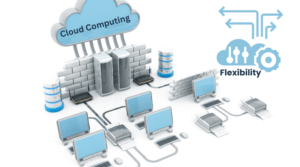
Cloud computing is a technology that allows users to access and use shared resources, such as servers, storage, and software, over the internet. It is a model for delivering IT services in which resources are provided as a service over the internet, rather than as a product that is installed on a user’s computer. This technology has revolutionized the way businesses and individuals access and use IT resources, making it possible for them to access powerful computing resources without having to invest in and maintain their own hardware.
One of the key benefits of cloud computing is that it allows users to access and use resources on-demand. This means that users can scale up or down their use of resources as needed, without having to invest in expensive hardware and software. For example, a business that needs to process a large amount of data can use cloud computing to access powerful servers and storage without having to invest in and maintain its own hardware.
Another benefit of cloud computing is that it allows users to access resources from anywhere with an internet connection. This means that users can access their data and applications from any device, including laptops, tablets, and smartphones. This allows for greater flexibility and mobility, making it easier for employees to work from anywhere and collaborate with others.
Cloud computing also offers cost savings to users. Rather than having to invest in and maintain their own hardware and software, users can pay for only the resources they need, when they need them. This can be a significant cost savings for businesses, particularly for those that have varying levels of demand for IT resources.
The three main subcategories of cloud computing are Infrastructure as a Service (IaaS), Platform as a Service (PaaS), and Software as a Service (SaaS).

IaaS is the most basic level of cloud computing and is used to provide users with access to basic computing resources such as servers, storage, and networking. These resources can be accessed and used on-demand, and users can scale up or down their use of resources as needed. IaaS providers include Microsoft Azure, Google Cloud Platform, and Amazon Web Services.
PaaS is a higher level of cloud computing that provides users with access to a platform for developing, testing, and deploying applications. This frees users from having to worry about the underlying infrastructure so they can concentrate on creating their apps. Google App Engine, Microsoft Azure, and Heroku are a few examples of PaaS providers.
SaaS is the highest level of cloud computing and is used to provide users with access to software applications that can be used over the internet. This allows users to access and use applications without having to install them on their own computers. Examples of SaaS providers include Salesforce, Google Apps, and Office 365.
Cloud computing also has its own set of security challenges and it’s important to consider the security risks when implementing a cloud computing solution. One of the main security concerns is data privacy and the protection of sensitive information. To ensure that data is protected, it is important to use encryption and secure protocols when transmitting data over the internet. Additionally, it is important to choose a cloud provider that has strong security measures in place, such as firewalls, intrusion detection, and security monitoring.
Another security concern is the protection of data in the event of a disaster, such as a natural disaster or a cyber attack. To ensure that data is protected in the event of a disaster, it is important to have a disaster recovery plan in place and to use a cloud provider that offers disaster recovery services.
In conclusion, cloud computing is a technology that allows
users to access and use shared resources, such as servers, storage, and software, over the internet.